The Shapeshifters
Perhaps the most famous of the Shapeshifters are the Werewolf Kin Group. However, Shapeshifters may actually be able to take on the form of any vertebrate. The most common shapeshifters tend to be large carnivores like werewolves, werelions, and werecougars. Almost all shapeshifters have a mammalian form, though there are some very uncommon shapeshifters that have reptile or bird forms. Except for the most powerful (and we’re talking legends here), Shapeshifters only take on the form of one animal in their lives.
Shifters who are born will begin shifting around the onset of puberty, and their animal form seems to be personality-based. For this reason, animal forms do run in families, but aren’t always a given. There’s been more than one werewolf family who has found out that their youngest is a weretiger. Shifters who develop their abilities through surviving a bite from another shifter will inherit the form of whatever shifter bit them. In shifter communities, it’s assumed that if you bite someone and they survive, you or your family will take responsibility for introducing them to Bound society and teaching them to control their shapeshifting.
Werebear
Werebears are rarer than Werecats or Werewolves, but do have a reasonably sized population in the United States. Werebears are usually solitary in nature, although they’re not necessarily mean or incapable of sustaining relationships. Werebears are usually chill and laid back, right up until you piss them off. Grizzly shifters in particular have a tendency to react to provocation with violent aggression. Black Bear shifters just have an unfortunate habit of eating food that doesn’t belong to them, and then feeling bad about it when you call them on it. Unlike their natural counterparts, werebears don’t go into hibernation in the winter. However, they do tend to slow down in colder months and can often be found taking naps. Do not wake up a sleeping bear shifter. Do. Not. They’ll wake up when they want to.


Werecats
Werecats are also fairly common both worldwide and in the United States. Like mundane felines, werecats come in two basic forms: Big Cats and Small Cats. Big Cats include shifters whose animal forms are things like panthers, mountain lions, lions and tigers. Small Cats have animal forms like bobcats, ocelots, cheetahs and even house cats. In the States, the most common cat shifters tend to have animal forms in-line with the natural fauna. For example, shifter mountain lions, bobcats and even panthers are more common than tigers or lions.
Cat shifters tend to be much more aloof than their werewolf brethren. Some cat shifters will form colonies or prides, but this seems to depend on the natural behaviors of their animal counterparts. Even cat shifters that hail from more communal cultures take time to warm up to strangers, and often do not react well to sudden changes. Furthermore, they are incredibly prideful and stubborn. However, once someone has made it into the good graces of a cat shifter, they’ll find that they have a friend for life…whether they want one or not.
Weredeer
Weredeer are extremely social shifters and are usually found hanging out in groups of other shifters or Bound. Weredeer feel incredibly vulnerable when alone. If Weredeer feel like a place has become unsafe or lacks resources to sustain them, they will quickly migrate to a new territory. They also are very cautious and attentive, and are the first to bolt when danger is near. This compounds with their social nature means news spreads fast amongst weredeer, and sometimes be blown out of proportion. Weredeer are also hierarchical, and have yearly events where a few of them fight amongst eachother to vie for dominance in their social groups. They are also almost always polyamorous with dominant members often having more partners than others.

Weredog
Weredogs are largely similar to werewolves, and are often described as “like werewolves but stupider”. They tend to be friendlier, more outgoing, goofy and generally just more ‘chill’ than their werewolf counterparts. They are known for being very trusting and loyal, and prefer smaller tight knit families over larger packs. They will do anything to protect those they consider part of their family unit.
Some weredogs chose to live nearly full-time in their shifted shapes and enjoy the comfort of being cared for. If they live among the Unbound, they tend to either move from family-to-family or live on the streets as strays to avoid suspicion.
Among the Bound, weredog breeds tend to be hereditary. It is unusual to get a were-chihuahua from a family of were-corgis. If an Unbound is bitten by a weredog and survives, they will inherit the breed of the weredog that bit them.
Werewolf
Werewolves are among the most common of the shifter kin groups, and not without reason. Werewolves all tend to be friendly extroverts who are deeply loyal to their families – both chosen and by blood. There are almost no ‘lone wolves’ as werewolves cannot stand to be packless. Werewolves are also almost all polyamorous. Werewolves form extended packs and will often take over neighborhoods or trailer parks so that they can all live and raise families in close proximity to one another. The sheer amount of social energy that werewolves have can be both impressive and exhausting.
Wereraccoon
Wereraccoons were a species originally native to North America, who have more recently begin spreading into Europe. They tend to be nocturnal and typically prefer spending a lot of time in cluster groups of the same sex. Wereraccoons have a reputation for being too clever for their own good, having a very loose definition of personal property, and an insatiable sense of curiosity. They are very adaptable and often dextrous, able to pay attention to fine details.
Wererat
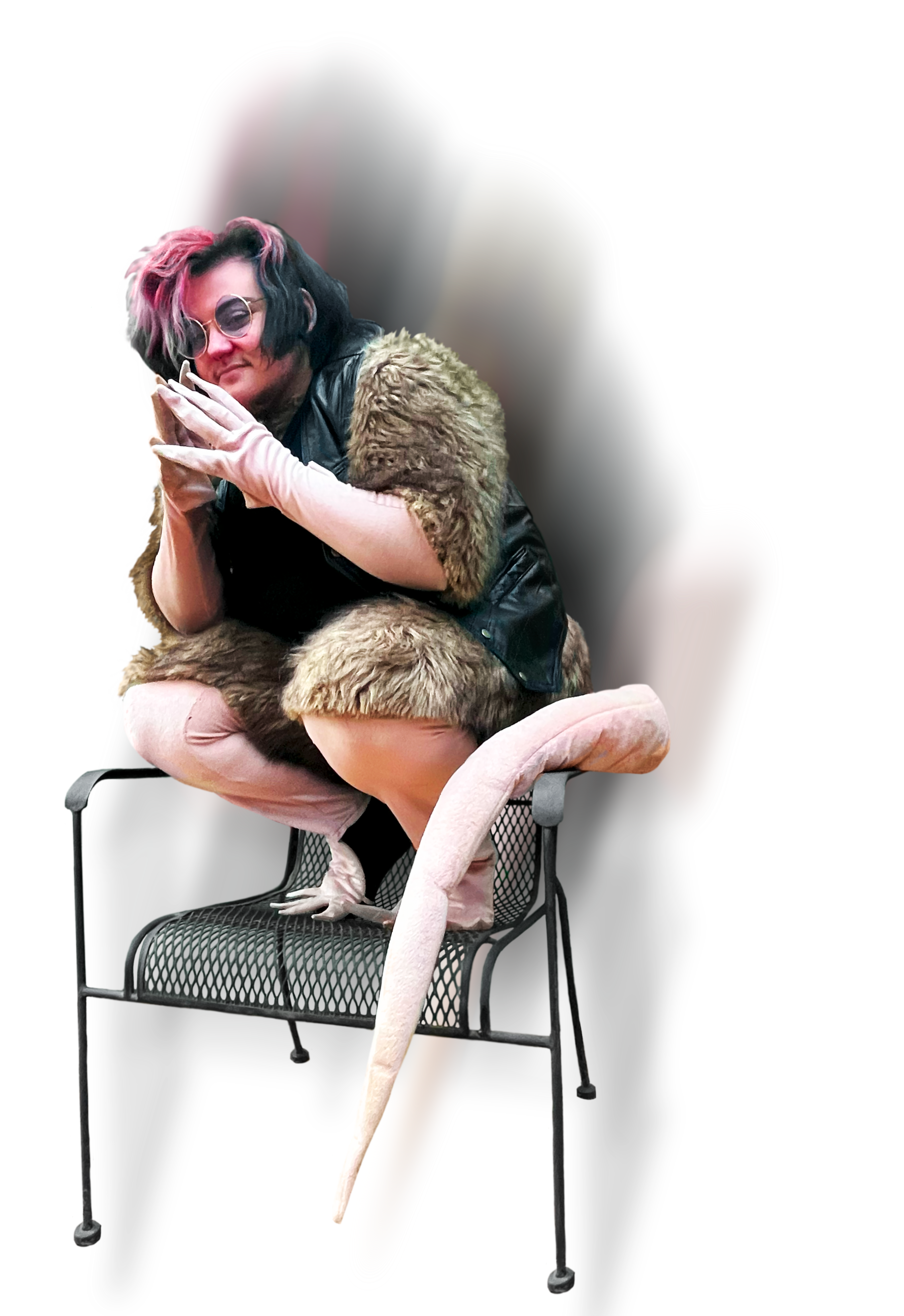
Wererats are among the smallest species of shapeshifters. Much like their natural counterparts, they tend to be curious, intelligent and very social, but prone to anxiety. They can be aggressive towards outsiders, and usually are suspicious of newcomers. Each group has a territory and generally is led by a dominant. Like werewolves, they will usually have multiple mates. Wererats are as good at getting into trouble as they are at scurrying out of it.
Werepossums
Wereopossums tend to be shy, very wary of others, and will play dead when threatened. They are usually more solitary, although sometimes established family groups will live together. They are mostly nocturnal and nomadic, although they’ll stay in one place as long as they feel they are safe. For all their shyness, wereopossums are typically very chill and easy to accommodate – as long as you don’t make sudden movements. They will eat damn near anything even vaguely edible. They are common in the south, south-east, and north east parts of the United States.
 confluxlarp.com